Discovering a civilisation
December 2023
I had always thought of Spain as a cultural desert. I was unfairly comparing it to Italy, but it was also a prejudice, one rooted in my being English and revealed in the places we visit and the words we use. When we speak of Europe, the English mean Italy and Germany and France. Spain is almost always just abroad – a telling distinction. Europe is held to be everything England is not – sophisticated, cultured – and thus axiomatically our superior. Somehow, Spain could not lay claim to these adjectives. It lacked something vital, an historic pedigree with which to leverage its reputation. Where was Spain’s Leonardo or Manet, its Dante or Baudelaire? Being merely ‘abroad’, it was our equal, admired only for its climate. It’s where one went if one sought uninterrupted sunshine and cold beer, and that’s it.
This was lazy thinking, like all prejudice, but Spain is not alone in suffering English condescension. Even mighty Germany is considered too linguistically proximate, too Protestant, too sensible (and too cold) to be in possession of the rich glamour of neighbouring France. Scandinavia, though imbued with a quirky charm, is too close to home. The Low Countries? Too boring (not my view, gentle reader, but a peak inside the English collective consciousness). Switzerland we consider a richer, but duller, France, with minus points for neutrality during WW2. That east of the Elbe is thought of as a bleak, undifferentiated plain called ‘Eastern Europe’, though now it is somewhat attractive because it costs nothing to get there. Even Portugal is considered a better version of Spain.
These judgements are harsh, if somewhat understandable. Still, it’s odd that Spain should come in for such rough treatment, given more English people visit Spain than anywhere else on earth. But then that might be the problem: Costa del Sol and its ilk cast a long, ominous shadow. Everybody is aware that the type of holiday Spain has long catered for has not emphasised the cultural. Depending on one’s perspective, those English colonies on Spain’s mainland are either heaven, a home-away-from-home, or places one would rather eat one’s own shoes to avoid. Regardless, they elicit impassioned responses, and are the main reason why many who might otherwise be tempted are put off going to Spain. Depending on your view, that’s either snobbery or taste, but it’s undeniable that a great many people want to be thought of as careful, cultivated travellers. They do not want, justly or otherwise, to be lumped in with the people who go to Benidorm.
The stumbling block the English have with Spain is thus nothing to do with Spain at all, but with the English who go there. That might be why our knowledge of Spain is so crude: Real Madrid and Barcelona, Ibiza and Marbella, bullfights, chorizo, manchego and rioja… that, and sweltering expats nursing pints of Madrí. At a push, in a hazy kind of way, we might also know Don Quixote (though there is uncertainty as to whether he is an author or a fictional character). But Picasso is an honorary Parisian and flamenco we assign to the box marked ‘Argentina’. Beyond that, Spain draws a blank. It doesn’t occupy the same mental terrain for the English as somewhere like Italy. We would be far more comfortable discussing Caesar (died 44 BC) than Franco (died 1975). Admirers of Spain are tossed occasional crumbs from the TV commissioner’s table, but the main courses are piled high with the hearty fare of Hitler, Henry (eight) and Imperial Rome.
There is another, more oblique, explanation for English attitudes towards Spain, which is that it didn’t get up to much during the Industrial Revolution. We, meanwhile, were entering our pomp, bestriding the globe. In the preceding centuries, we came into a lot of contact with the Spanish, but after that, the country seemed to fade into obscurity and, frankly, irrelevance (there’s a nugget of truth to this, but it is not wholly accurate. But who, after all, is au fait with the Spanish-American war of 1898?). Kenneth Clark’s lauded 1969 documentary series Civilisation – a thirteen-episode tour of 2,000 years of European cultural life – is famous for ignoring Spain altogether.
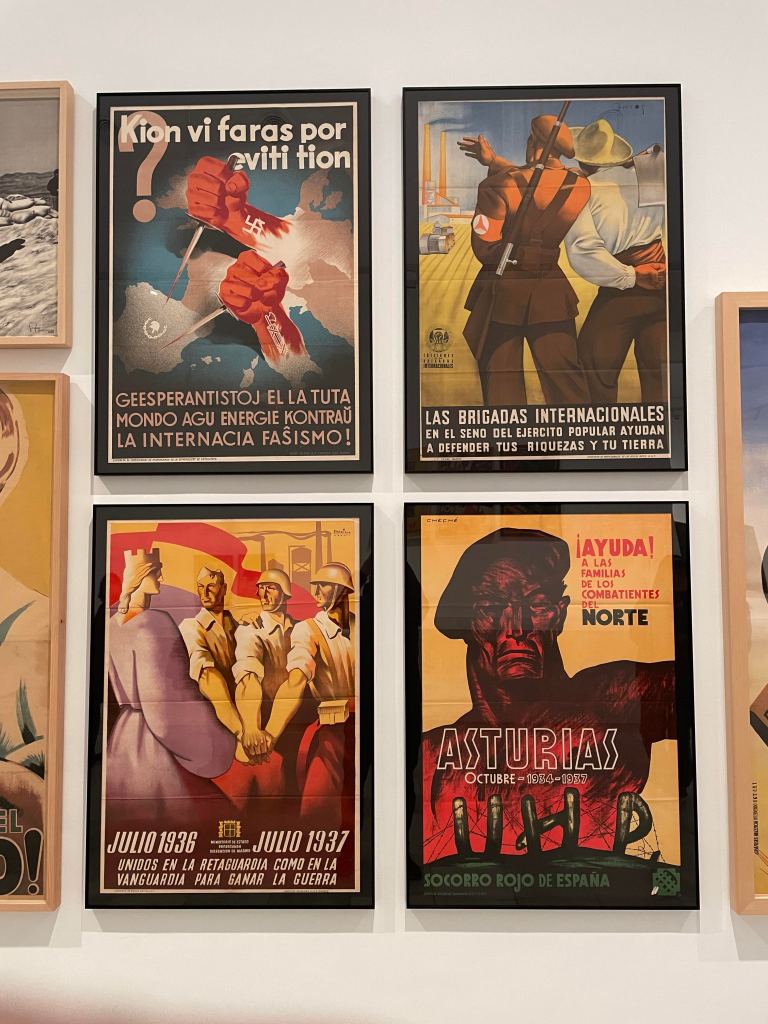
But what a country, and what a history, to subject to our derision. The conquistadores, Ferdinand and Isabella, the Moors, Charles V, Velásquez, the Reconquista, the International Brigades, conversos, Goya, Cortés, autos de fé, the Alhambra… Clark admitted that Spain was among his “offensive omissions” but that he was restricted by his topic:
If I had been talking about the history of art, it would not have been possible to leave out Spain; but when one asks what Spain has done to enlarge the human mind and pull mankind a few steps up the hill the answer is less clear. Don Quixote, the Great Saints, the Jesuits in South America? Otherwise she has simply remained Spain…
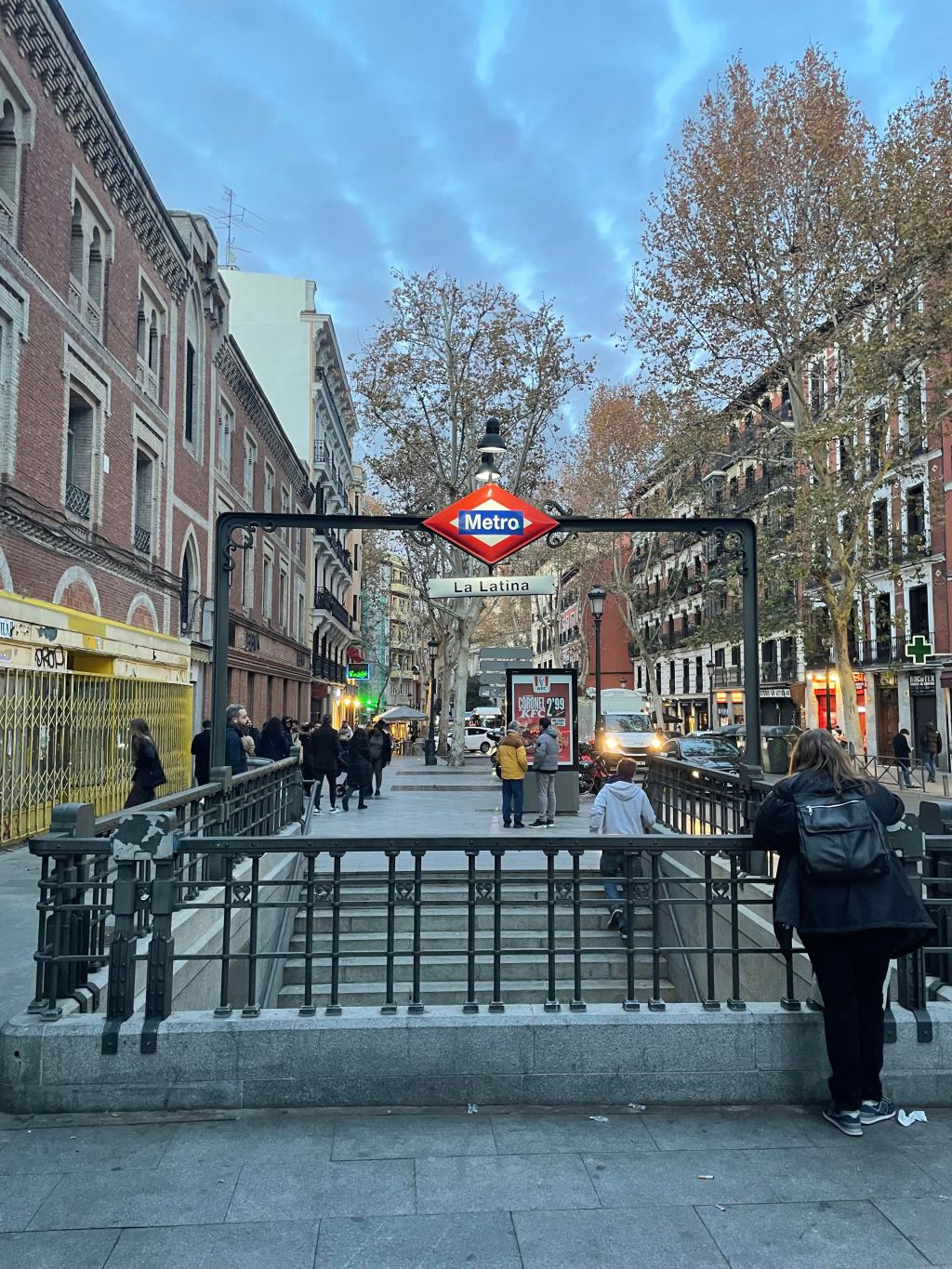
I settled on going to Spain to see if Clark was right. I did so also to quell the thought that was gnawing at me that I should at least try to divest myself of Italy. Spain seemed to fit the bill: familiar, in a vague way, but also something of a mystery. I set about selecting a city, toying with Barcelona before ruling it out. This was sheer petulance. Everybody I spoke to about my deciding to go to Spain had implored me to go to Barcelona. People who have been to Barcelona are always telling you to go Barcelona. “Ah,” they would say, wistfully, “you should go to Barcelona.” “You must go to Barcelona.” And so I booked a flight to Madrid.
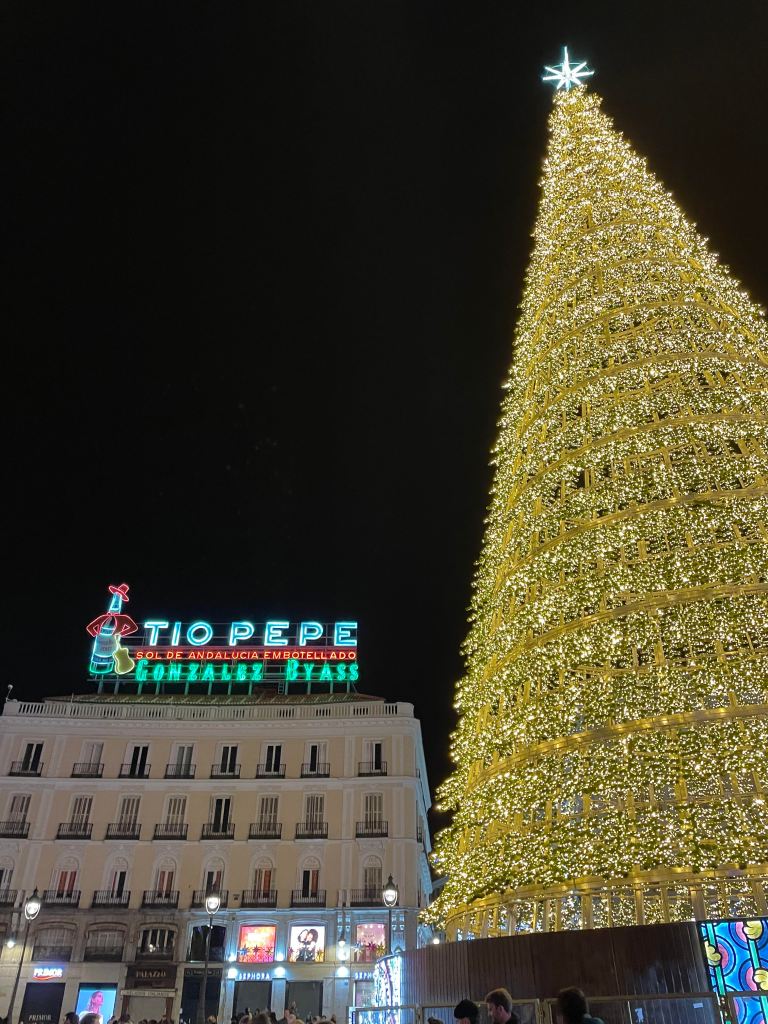
Within a few hours of landing I was standing before Guernica at the Reina Sofía, also home to a collection of propaganda pamphlets and posters from the civil war. Within Spain, Franco’s legacy is tortured and fractious. Outside Spain, it is practically unknown. Like Mussolini and Italy, the outsider sees Franco as an aberration: a control freak imposed upon an easygoing, carefree domestic populace, an authoritarian interlude between liberal normality. Of course this is not true (nor is it true about Italy), but it is the perception beyond Spanish borders, and no doubt a useful one. In Puerta del Sol, the half-moon piazza at the city’s heart, stands the Royal House of the Post Office, which during Franco’s rule was home to the Ministry of the Interior. Inside, in the basement, was where the regime’s opponents were tortured. It did not appear, however, to possess any kind of resonance with the Spanish, thousands of whom were milling about outside enjoying the festive atmosphere.
Immediately it was obvious that Spain was a world unto itself, with close ties to parts of the globe where English links are weak. The faces of the people I met in Madrid are seldom found in the Anglosphere outside of the United States: Peruvians, Colombians, Ecuadoreans. This evidence of immigration from South America was a living reminder, amidst the historic monuments, of Spain’s storied past. Thirty minutes by train from Madrid, Toledo offered another example of the diversity and richness of Spanish history. Approached from a Roman-era bridge, its buildings exposed the interplay of Moorish and Christian rule, and their changing fortunes following the reconquista. Toledo’s elevation meant that cars couldn’t get up there easily and most of the city was pedestrianised, amplifying the effect of having stepped back in time. Its train station, built in the Neo-Moorish style, is alone worth the journey.
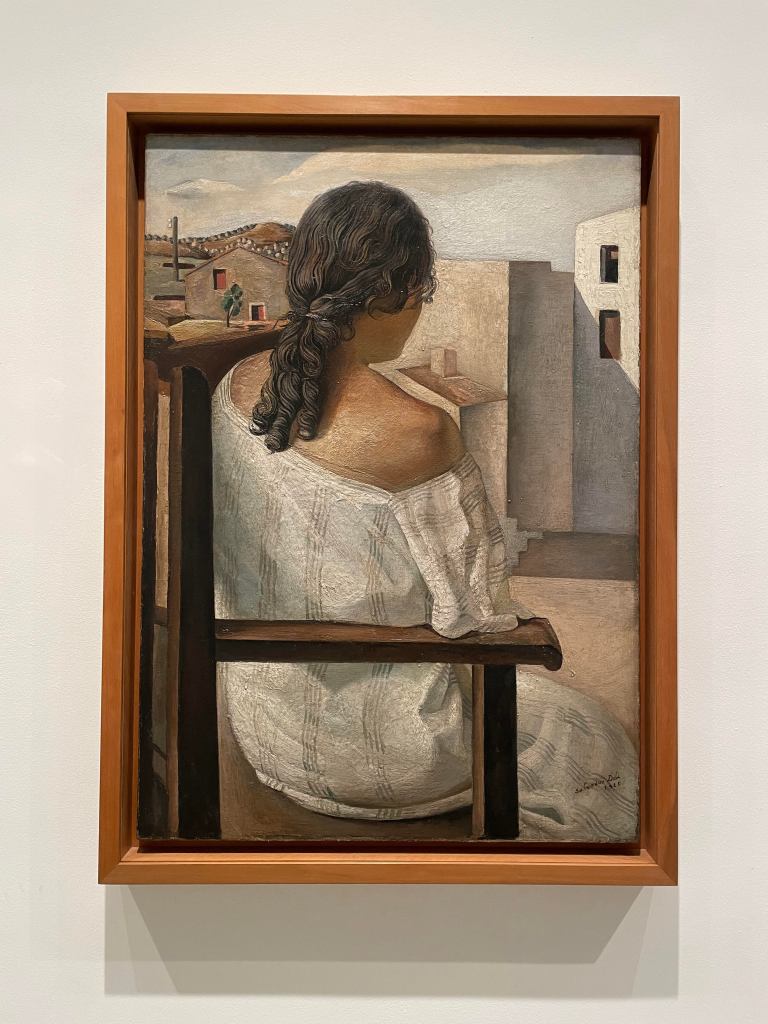
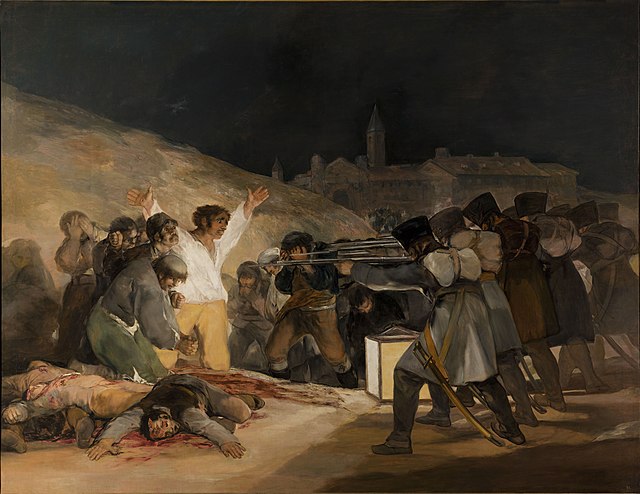
But it is at the Prado back in Madrid that any notion of Spain as a cultural cul de sac is shattered. No culture that could produce Velásquez and Goya, or nourish the phantasmagorical mind of El Greco, deserves opprobrium. These surely have helped “pull mankind a few steps up the hill.” I hadn’t expected to be so impressed with what I saw. I should have done my research. The link between Spain and Naples meant thatwith in Madrid’s so-called Golden Triangle of Art (the Prado, Reina Sofía and Thyssen-Bornemisza museums) I would find Caravaggio and Giuseppe di Ribera. It was nice to be taken by surprise: Dali, whose works I’d presumed would be as a frivolous as the man who produced them, was revealed to be capable of great beauty and restraint. It was likewise a pleasure to final ‘get’ Picasso. His work had always left me cold, technically impressive, but emotionally mute. But Guernica, essentially a giant cartoon, was powerful and emotive in that strange way that very good cartoons often are.
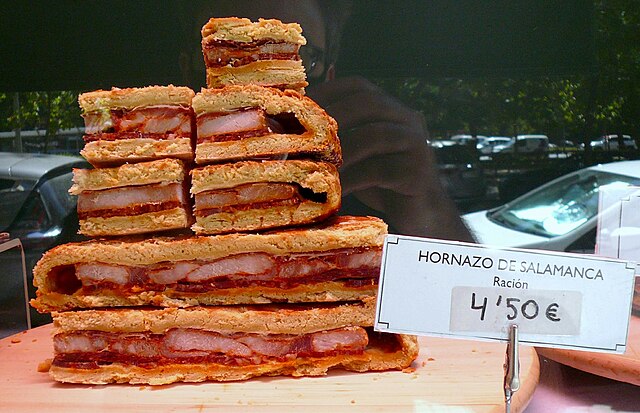
What might Clark have made of Spain’s gastronomic efforts? Clark was as thin as a rake, so he would have been unlikely to have followed my diet in Madrid: I ate only one thing during my entire stay, Hornazo de Salamanca, great slabs of pastry stuffed with ham. These could be picked up at any deli or coffee shop, and were always temptingly piled high in the window. At lunchtime, as I pushed with both hands yet another sturdy parcel of bread and pork into my gob, forcing my mouth to collapse and expand like a postbox swallowing a package, I would already be thinking of the one I’d be having for dinner.
Having concluded my tour of high art, I wanted to see the Bernabéu, home of Real Madrid, before I left. This was something of a pilgrimage in honour of an adolescent infatuation. I began supporting the club after David Beckham’s move there in 2003 to become a galáctico. An expensively assembled team of the world’s best players, the galácticos had a swagger and arrogance that appealed to me as a testosterone-addled teenager. Real were famous for being obsessed with winning at any cost – not for them the left-wing romanticism of Barcelona or sonorous talk of footballing philosophies and ‘playing the game the right way’. Victory by any means and crushing the opposition – Real were footballing fascists, and what thirteen-year old boy isn’t, with every sullen, resentful fibre of his being, a little fascist at heart.
I took the metro to the Chamartín district where the Bernabéu is located (those of you of a certain vintage will remember that Chamartín was the name of Real Madrid in the game Pro Evolution Soccer 3, which didn’t have the naming rights for the teams; my club Aston Villa, more prosaically, were known as ‘West Midlands Village’). I found the stadium under refurbishment, which is a euphemism meaning the expansion of hospitality suites and the provision of more conferencing facilities for chronically bored businessmen. From the street, the refurb amounted to swaddling the former stadium in a steel grille. It looked like Birmingham New Street. I walked all the way around it; somewhere within was a football stadium. I made an effort to look for any sign that this was the home of Real Madrid. That this was hard to do has to be marked as a failure when you are the world’s biggest football club.
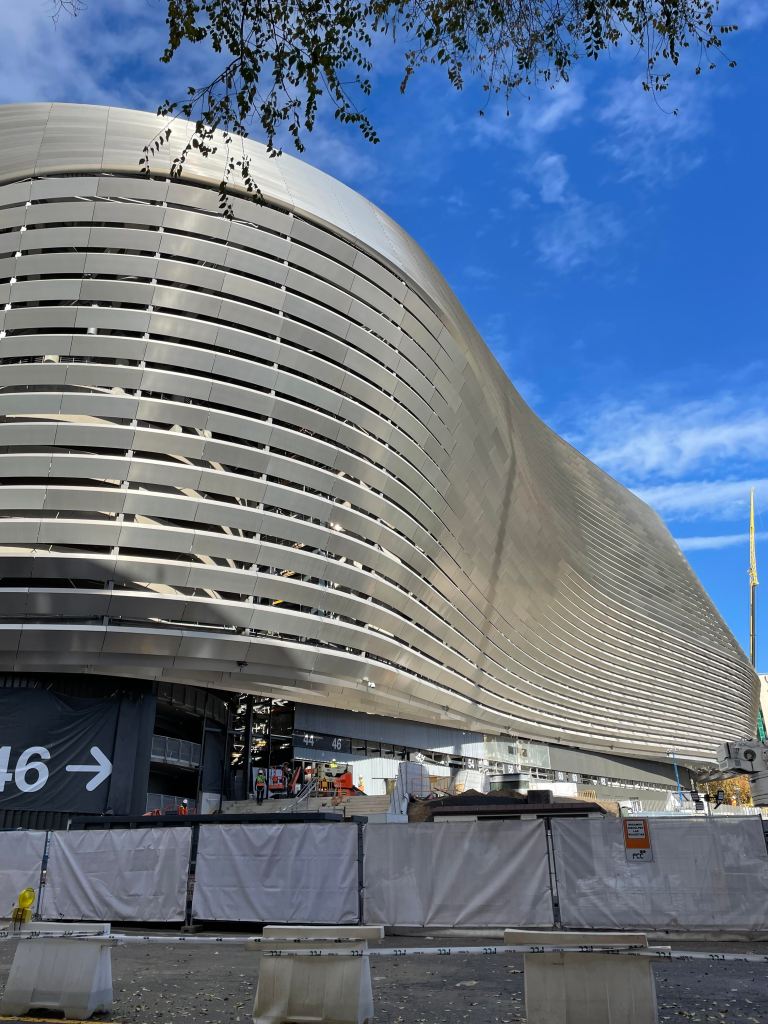
This was my only disappointment in Madrid. It’s impossible of course to get a complete picture of a country from only its capital city. But I have at least now revised my former view of Spain. The Spanish, polite but quiet and a little reserved, reminded me of another people: the English. Whether the Spanish find the comparison complementary, I don’t know. Clark was probably right about Spain’s contribution to intellectual life, but when it comes to art, simply remaining Spain is more than enough.
 Jake Plenderleith