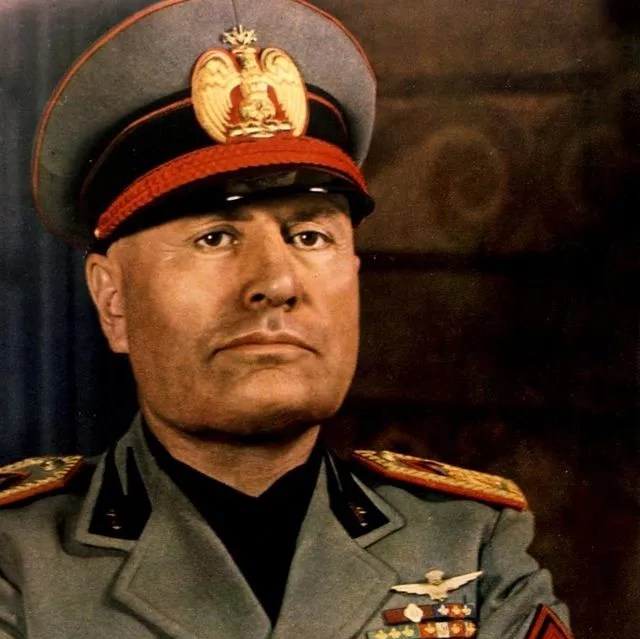
“It appears that the war has taught people how to kill”
25 September, 1921 – a Sunday. As dusk falls, Giuseppe di Vagno sets off for a stroll among friends in the coastal town of Mola di Bari in southern Italy. Di Vagno, a lawyer and socialist deputy imprisoned during the war due to his opposition to Italy’s entry, had spent the day in a meeting discussing the opening of a local Socialist Party section. As di Vagno and his companions amble through the streets, a column of men emerge from the darkness. Shots are fired and a grenade is thrown. Di Vagno is struck by two bullets and rushed to hospital. Though bleeding internally, he is still able to talk. He describes his attackers as “decently dressed”, and believes he recognises one of them from his home town of Conversano. The following day, Di Vagno dies. His murder is the first, but certainly not the last, committed on an Italian parliamentarian by fascists.
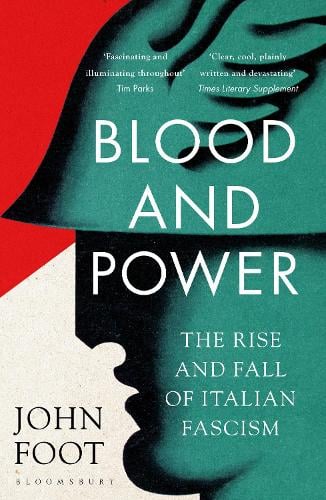
The use of violence in the fascists’ toppling of Italian democracy, says John Foot, has been under-emphasised. Conversely, Foot contends, too much attention has been afforded to Mussolini’s time in power, and not enough to the way that power was attained. Blood and Power seeks to redress these imbalances. The usual protagonists feature, but they share space with contemporary and reflective testimony, some from major players, others from ordinary witnesses. The stories of those perpetrating the violence, or suffering its consequences, are woven around the familiar milestones of Mussolini’s ascent. This is a cautionary tale: democracy is fragile when a violent minority is set on its destruction – and when those who can, do little to prevent it.
On their journey to office, the fascists relied on a blunt and effective instrument, violence. In so doing, they were falling back on skills honed on the battlefield. Italy had declared war on Austria-Hungary in 1915. Fought in the alpine terrain of the northern Veneto, where conditions were hellish and casualties high, the war was a drawn-out slog with neither side capable of dislodging the other. The Italian generals were suspicious of their own troops and treated them appallingly. One, General Cardona, claimed that his troops were on “military strike”; another, General Graziani, having been given his own firing squad, “took to his task with some gusto”.
Italy won the war, but at a terrific cost. Half a million Italian combatants lost their lives, in a conflict plagued by ill-discipline, poor leadership and misjudgement. At the Battle of Caporetto in 1917, Austrian troops had broken through the Italian line, which was forced to retreat for almost 100 miles to the Piave river (Mussolini, 1922: “It was on the banks of the Piave that we began a march which cannot be halted until we reach our ultimate goal: Rome”). Scores of Italian servicemen desert; a quarter of million are taken prisoner. Eventually the Italians rally, and in a major counter-offensive at Vittorio Veneto a year later, shatter the Austrian’s defensive line, whose troops are sent scattering.
The nature of Italy’s victory, and the sacrifices and disasters that had befallen it in its achievement, meant that any celebration was muted. The nationalist poet and demagogue Gabriele d’Annunzio described Italy’s victory as “mutilated”. Territory in Dalmatia and the Tyrol that had been promised Italy in the Treaty of London in 1915, the annexation of which had been contingent on Italy entering the war on the side of Entente, were not fully delivered. The shame of Caporetto haunted the collective consciousness. With exquisite timing, immediately after the war’s ending, arrived the Spanish flu. Adding to the apocalyptic whirlpool, it carried off 600,000 Italians.
The war was an enormous social upheaval imposed upon a young country. For many Italian soldiers, their service was the first time that they came to see themselves as belonging to one nation. Italy had only been fully unified in 1871, and Italians had far stronger local and regional loyalties than they did national. The war changed that, as it did much else. After Caporetto, handsome promises were made to those who had served, few of which were later delivered. It was the war, too, that converted Mussolini from a socialist to a fascist.
Peace had not mollified Italians, and postwar Italy was sharply divided between those who had supported the war, and those who had bitterly opposed it. The right saw the war’s disastrous handling as embodying the timidity of the ruling elite. To the left, the war exposed the government’s myopia, and the country’s desperate need for reform. Great questions about Italy’s future were being asked. Neither the left nor the right believed the liberal consensus that had prevailed before the war capable of providing them. For both, the war’s conclusion was an opportunity for a radical new start.
The political and social climate was restless and public rhetoric stark, a strange blend of resentment and dissatisfaction, with hope and a yearning for change. There was also a potent desire for retribution. In the melange, the right and the left dug in to their positions. In such circumstances, conflict was possible, but not inevitable. Had the liberal government demonstrated a tincture of resolve and determination, it could have withstood the threat to its legitimacy from the left and the right. Similarly, as Foot explains, there was nothing preordained about the fascist’s eventual victory. The years 1919 and 1920 were Biennio Rosso – Two Red Years – with momentum firmly with the left. In the first general election following the war in 1919, 156 socialist deputies entered Italy’s lower house. Not one fascist gained a seat. In time, every one of those 156 representatives would be assaulted.
The war had not given birth to the division between right and left, merely exposed and exacerbated it. Already before 1915 Italy had witnessed left-wing disturbances, most prominently during “Red Week” in June 1914, where workers and socialists undertook a series of disabling strikes amid rioting and unrest. During the war there were also uprisings in Milan and Turin which were strongly marked by anti-militarism. The conduct of the war itself and the punitive behaviour of Italian top brass deepened tensions. Foot relates how one solider was executed for having had a pipe in his mouth when saluting a general.
During the Biennio Rosso, cooperatives sprang up across the country. Factories were occupied, and barricades erected. Strikes were recurrent. This was a movement that, despite its parliamentary representation, was bottom-up: its nature was spontaneous and dramatic, not planned or focused. Previous left-wing uprisings had come to nothing, petering out due to a lack of organisation (and would later be mourned as huge missed opportunities). Despite the left’s former failings, it was felt that this time, things might be different. Striking workers could draw on genuine widespread solidarity from fellow factory and agricultural workers across Italy. For the hopeful on the left, it seemed that a fairer and more just age might just be dawning.
To some, this new age was disastrous. Traditionalists were left reeling at the surge in popular dissent. Landowners and industrials looked on aghast as cooperatives consolidated their gains, and workers insisted on better pay and conditions (many of them women, who had for the first time during the war entered the industrial workforce); in some cities, soviets had been established. This lurch towards the far-left, in the context of the Bolshevik seizure of power in Russia, alarmed conservatives. In 1920, socialists convened in Milan. There, they proposed an incredible motion: whether or not to have a revolution (with the noes only just carrying it). Pacifism was much in vogue, enraging many of Italy’s disfigured veterans. In early 1921, the PCI, the Italian Communist Party, was born. These were terrible portents for the right. A response would be forthcoming: the Biennio Rosso would be only a prelude to the Biennio Nero.
If the war radicalised the left due to its futility and grotesqueness, it agitated the right for different reasons. They believed the war to have been a disaster because of a lack of political will, proof of which was Italy’s tardy entrance to the conflict. This sapping of the spirit was to the right the responsibility of those who had vocally opposed the war, known as the disfattisti: the defeatists (Di Vagno, a socialist and a disfattisto, was an obvious fascist target). Politicians who had been consistently anti-war bore the brunt of fascist ire. One of them, Giuseppe Modigliani, brother of the artist Amadeo, was the target of hysterical abuse wherever he went. That he was Jewish compounded some on the right’s indignation.
To counter the leftist threat, squadristi, violent far-right militias, were established across the country. Made up of disaffected socialists and veterans from the war, most of whom were very young, it relied on violence, threats and intimidation to silence its opponents. In April 1919, squadristi attacked the offices of Avanti!, the socialist daily, in Milan, with a vigour that was unparalleled. Squadristi consistently framed such attacks in terms of reprisal, that they were only responding to violence from the left. In truth, they were often the instigators.
The left faced a number obstacles in its response to fascist violence. It was unable to unite and riven by faction fighting, the Socialist Party split between two warring groups. The fascists, by contrast, were organised and united. Neither could the left rely on the moderate press, or on the church, for support. The police, too, were either tacitly or openly supportive of the fascists, and were accused of turning aside when the fascists descended on some town hall or socialist meeting. In Foot’s telling, “The state was not neutral”.
Moreover, the left’s reprisals on the fascists were often bungled. In Empoli, sailors brought in to break up a strike had been mistaken for fascists, and were set upon and brutally killed. Even worse was the anarchist bombing of the Diana Theatre in Milan. It had been carried out as an act of support for the famous anarchist Errico Malatesta, who was in prison and on hunger strike. The attack killed 21 civilians and was a national outrage. Malatesta knew nothing of the bombing and proved so in court. But it was an easy win for the fascists, who could position themselves as the saviours of the nation, the only bulwark against left-wing violence. Slowly, “middle-class and moderate public opinion started to move towards fascism”. Fascist thuggery was framed as a necessary mitigant in preventing the left from assuming power.
The parliamentary elections of 1921 were crucial for the future of Italy. In the face of open violence and intimidation, voters had still returned some 123 socialist deputies. But the fascists, too, had obtained 35 seats of their own. Socialists were now sharing parliament with the very fascists who had encouraged, and even participated, in attacks against them. On the first day of the new parliament, Francesco Misiano, a Communist Party deputy and famous anti-war advocate, was approached by the fascist Silvio Gai. Gai informed the democratically elected Misiano that he must leave. When Misiano refused, he was surrounded by a mob of armed fascists, and hustled out of the building. Fascists across the country were thrilled at the ‘deserter’s’ physical expulsion from parliament.
The attack on Misiano was a rupture: “Tactics seen on the streets and in the countryside were now used in the plush corridors and the magnificent setting of the parliament building”. Antonio Gramsci described it as “pure and simple criminality”. In the summer of 1922, fascists upped the ante further, effectively seizing control of towns and cities. In Ravenna they wrought violence against every symbol of socialist, communist and anarchist influence. The cooperatives in the city were reduced to ashes. The targeting of Ravenna, and other localities in the Romagna and the Marche, was deliberate; it was here that the Red Week uprising had taken place in 1914. The fascists were gaining an unstoppable momentum:
It was a massacre and an occupation, directed at socialists, republicans and the cooperative movement – and both politically and economically inspired. Fascists took control of the city, camping out as if they were a real army. They saw no need to ask for permission.
With fascists now de facto in charge in parts of Italy, the liberal government, which had been supine in the face of squadristi atrocities, finally mustered up the courage to act. On October 28, 1922, the prime minister Luigi Facta presented King Victor Emmanuel with an order to impose martial law that required the king’s signature. The king refused. Why he did so has been the cause of much speculation, perhaps out of fear or from a tacit sympathy for fascism. He may have been reluctant to raise tensions, or it could simply have been an act of colossal stupidity. In any case, the consequences were catastrophic. Facta resigned, and two days later, Mussolini is in the Quirinale, shaking the monarch’s hand.
Blood and Power offers ample evidence that tens of thousands of Italians were not passive witnesses to the fascist’s destruction of their country. This is a useful corrective to the idle view that there was something inexorable and organic in the fascist’s seizure of power, that there is something in the Italian character that allowed fascism to take root and flower. Foot’s relaying of fascism’s rise is fragmentary and anecdotal, revealing in a piecemeal way how, via the application of brute force, the fascists overran democratic institutions and led Italy down a 20-year, blood-stained dead-end.
Among Mussolini’s first acts as prime minister was the issuing of a decree – countersigned by the king – announcing an amnesty for crimes of political violence, with the proviso that it applied only to those crimes that had been carried out “for nationalist reasons”. Any political crime whose motive was to “crush the existing order”, in other words, those carried out by the left, were not included in the amnesty. This, Foot writes, meant that socialists were “defined, by law, as anti-national”. That it had been the fascists that had crushed the existing order was ignored. One week after the decree came into force, in December 1922, Giuseppe di Vagno’s murderers were granted their freedom by an appeal court.
 Jake Plenderleith