Italy is more than a mere backdrop for pretty pictures
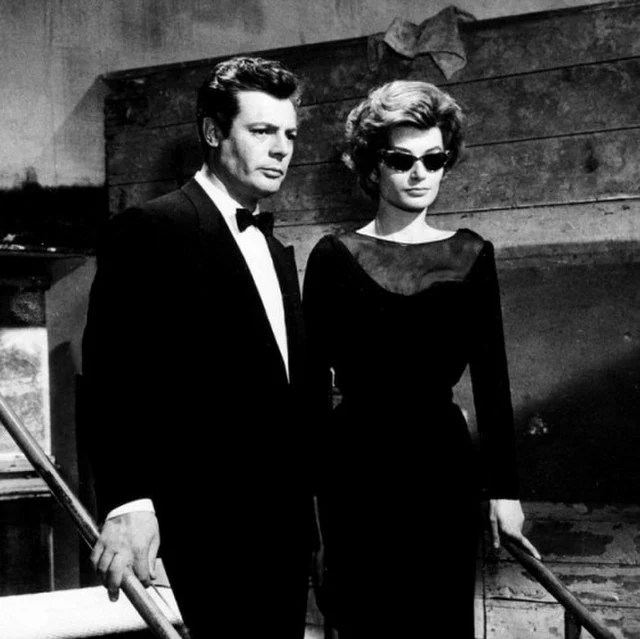
I have come, by gentle degrees, to loathe la dolce vita.
Not the Fellini classic, but the idea. Or, more precisely, how the idea is packaged, sold and repeated ad infinitum.
The entry in my COD – n. Life of pleasure and luxury [It. = Sweet life]. In English, it describes enjoying the finer things life has to offer. But the phrase is less abstract when it concerns Italy and Italians. You know this, because it is how the country is everywhere advertised: everyone in Italy is thin, stylish, good looking, well-off and rides a Vespa; they are happy, healthy and young, reside in impossibly gorgeous homes and are dripping in expensive jewellery.
It is the Italian equivalent of arriving at Heathrow to great collages of Routemasters, Coldstream Guards and the London Eye, or any British film where the establishing shot tilts from Big Ben to a black cab and a gentleman in a mac clutching an umbrella (and folded under his arm, The Times); everyone is posh and a bit bohemian (and conflicted) and lives and works in London (with a quaint second home in the Cotswolds). It’s Notting Hill.
In other words, it is a term that encompasses a very small number of people and their high status lives. That is not the Italy I know, nor is it even nearly representative of Italians I have met. And I resent the fact that this Other Italy is ignored in favour of a meretricious, boring cliché. The Other Italy deserves more recognition.
Social media has exacerbated the problem, but didn’t create it. After the war, Italy underwent an economic boom. The country was dramatically, rapidly modernised. Hollywood actors arrived in Rome. The paparazzi was born. Vespa was launched. Roman Holiday was released. This is when the concept of la dolce vita took root.
Indeed the Fellini film, which came out in 1960, probes the complexities and contradictions of post-war Italy. A conservative, religious, and somewhat ‘backward’ country is rocketed into modernity. Much is gained, including important material comforts. But what, if anything, is lost? In shaking off the tiresome encumbrances of history, had Italy merely embraced the worst of the West?
A new advertising campaign has thrown the problem into sharp relief. The Italian tourist board launched ‘Open to Meraviglia’ (‘Wonder’) in a bid to showcase the country’s beauty. The centrepiece of this drive to bring in more tourists was the use of Botticelli’s Venus, or more accurately, the use of the head of Venus in that work, which is superimposed onto the body of a glamorous woman taking a selfie. Elsewhere she is seen gripping a pushbike at the Colosseum.
Interestingly, the campaign provoked some hostility online. Some Italians felt that it was rather crass to deface a famous painting in a bid for more money, or to advertise Italy in such an unimaginative way. In short, if the Mona Lisa wearing a baseball cap is considered kitsch on a tote bag, why is Italy’s tourist board doing something similar?
As ever, there is a hashtag attached to this push, with people encouraged to share photographs. Those featured on its homepage adhere to the typical strict, homogenous tropes: the Amalfi coast, a priest on a bicycle, scenic towns with cobblestone streets…
Holy Crow, the crushing repetition! They are all alike – they do not deviate from the accepted idea of how Italy should look. They are also, it goes without saying, overdone. The same photograph, shot in the same way, a million times. Kiosks sell these images on key rings and calendars. It turns out that, given the chance to capture Italy ourselves, we can do no better than a postcard.
Which brings us back to the influence of (what else?) social media. Plenty has been said about the hive-mind created by Instagram and its impact on travel. It’s why going to see the Trevi fountain is so dispiriting in the summer. ‘Rome, at the start of the twenty first century,’ wrote the art critic Robert Hughes, ‘has been gutted by the huge and ruthless takeover of its imagination by mass tourism and mass media’. (But then who is the tourist? It’s you and me. It’s easy to be self–deceiving and consider everyone else the nuisance. To them, you’re the nuisance).
Recently, an NYU student who spent a semester in Florence wrote of her disappointment in the Italy she encountered (a sample line: ‘I’m not quite sure whom I resented more during my stay in Italy: my American classmates or the locals’.) It created a predictable stir, yet it was informative in that it exposed the bitter pill of unrealistic expectations. Social media fans the flames of those expectations. Its ‘takeover of the imagination’ is surely the envy of any totalitarian.
I have spoken of the Other Italy. It is unglamorous and quotidian. It is folks going to work and raising their children, and worrying about the bills. It is badly built apartments and uncollected rubbish. But, it is where one also finds generosity, friendship, camaraderie and real life. And it is where most Italians live.
Granted, a couple on a city-break to Venice are unlikely to want to seek out this Other Italy, and who could blame them. Their holiday is a temporary release from their own workaday world. But I implore anyone with a real interest in Italy to consider venturing beyond the tourist cordon sanitaire.
As a hypocrite, I have of course sampled the glossier side. The lovely light drew me in, and my phone too has been carefully angled so that it captures just the right shot of Santa Maria del Fiore. So I know the temptation. And I also know that an idealistic perception of another country can be enjoyable (what would life be without a certain idea of France?) But when the dream edges out reality, when it begins to dull the mind to discovery, it is due a rebuke.
One of the things that attracted me to Italian culture was that, just as it knew how to enjoy itself, it knew how to be serious. Being serious is one of life’s pleasures too, and Italians, in their reverence for Dante and Italian literature, do it well. But the Italy that is being endlessly recycled to the world is making the country resemble nothing but a backdrop for pretty pictures. It’s more than that, as anyone who truly loves it knows.
The Other Italy is receiving more attention, it’s true. The problem is that it tends to dwell on crime. Gomorrah revealed the depravity of the Neapolitan underworld, and received international acclaim. Inspector Montalbano has also contributed. Granted, those shots of Montalbano sipping his espresso on his balcony, and looking out at the glittering Med, are ineffably attractive. But the show does not shirk the other side of the ledger (prostitutes, drug addicts).
Obscure in the gulf between the twin peaks of Instagram Italy and the Italy of ‘ndrangheta there is another country worth exploring. For the curious wishing to see it, I have some advice, which I will offer you gratis.
First, use public transport. The bus and the train are where you are going to meet ordinary Italians, not in the back of a cab. Second, try and slip from the tourist track. Third, eat where the locals eat; you will meet people, and the food will be better and cheaper. Fourth, if you can, read the newspapers and watch the news. Fifth, learn a bit of the language. You’ll pick up more, and people will open up to you.
I am of course speaking into the wind. The iron laws of attraction and advertising mean that the stylised version of Italy will not be usurped. I just wanted to give it a kick.
 Jake Plenderleith